The 2026 Fire Safety Tips
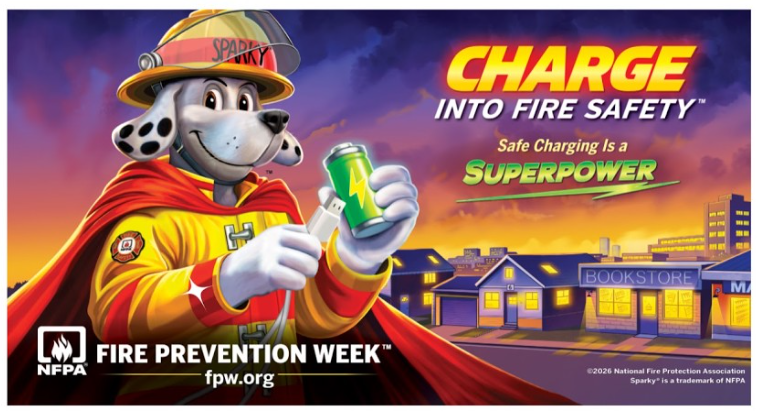
On each phone QSO, we like to read a hint for fire safety. Here is the complete tip list for this year's special event.
- Use the cord and charger that came with your device or ones approved by the manufacturer. Using the wrong charger can damage the battery and increase the risk of fire.
- Charge devices on a table, desk or other hard, flat surface.
- Do not charge them on beds, couches, or under pillows. Devices and chargers produce heat during normal charging. Soft surfaces can trap heat and block airflow, which can cause the battery to overheat.
- Stop using your device if it feels very hot, starts to swell, is smoking, or has a strange smell. These are warning signs that the battery may be damaged or failing.
- Unplug your device when it is fully charged. Do not leave it plugged in longer than needed. Leaving a device plugged in too long can increase heat and stress on the battery.
- Charge larger items like e-bikes, scooters and power tools outside and away from exits. These batteries are larger and store more energy. If they fail, fires can grow quickly and spread.
- When on a plane, keep your device where you can see it while charging. Do not charge devices in overhead compartments.
- Do not charge e-cigarettes or vapes on a plane. If a battery overheats or fails, it is important for the flight crew to respond quickly.
- Keep batteries at normal room temperature in a dry location out of direct sunlight.
- Never expose batteries to freezing temperatures below 32 degrees F (0 degrees C) or extreme heat above 105 degrees F (40 degrees C), such as inside a hot car.
- Store loose batteries in protective, non-metal cases to prevent accidental short circuits.
- Stop using a battery immediately if you notice a strange odor, swelling, leaking, unusual heat, or odd noises.
- Never throw old or damaged lithium-ion batteries into regular household trash.
- Drop off spent or damaged batteries at a designated Hazardous Waste Facility or local recycling center, like Lowes or Home Depot.
- If you have a specific device (like an electric car, e-bike, phone, or power tool) or a damaged battery, contact the manufacturer for details about your battery.
- Most cell phone manufacturers recommend charging a lithium-ion battery to 80% unless you are immediately leaving on a long trip where 100% is desired.
- Lithium Iron Phosphate (LFP) batteries can be charged to 100% without any damage to the battery.